
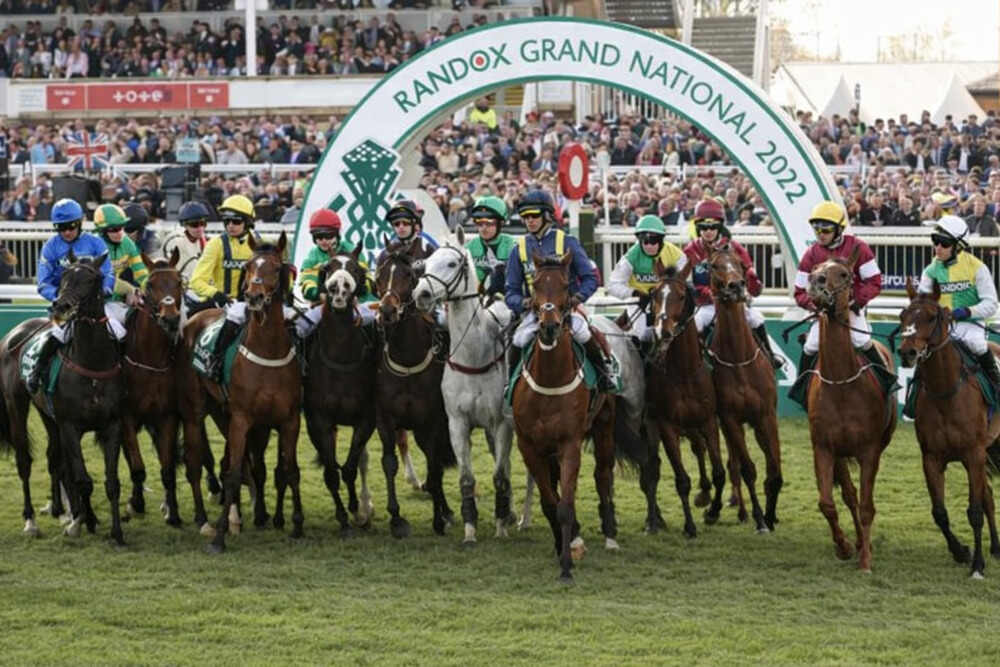
Grand National 2026 trends can be looked at in two very different ways. One is the usual route: scan the market, mention a few fashionable names, throw in a couple of stats and hope one of them sticks. The other is a little more interesting.
Instead of starting with the horses everyone is already talking about, I wanted to start with the last 11 winners. Not to find a magic formula — the Grand National has never been that simple — but to work out what the modern winner actually tends to look like. Age, weight, recent form, stamina, chase experience and season profile: when the same traits keep appearing, I stop treating them like coincidences.
So rather than asking which horse is the most popular pick for Aintree in 2026, I think the better question is this: which runner looks most like the kind of horse that usually wins the race? For anyone wanting the official race hub alongside this piece, the Grand National website is the obvious place to start.
What the last 11 Grand National winners can teach us
I didn’t want this to be another Grand National piece built around hype, market noise and a few lazy trends thrown in for effect. If I was going to take the race seriously, I felt the best place to start was with the last 11 Grand National winners.
Not because history gives me the answer. It doesn’t. This race is still messy, strange and fully capable of making a fool of anyone who thinks they have cracked it. But when the same traits keep showing up again and again, I think they are worth respecting.

So before I get into the Grand National 2026 runners, I want to ask a simpler question: what does the modern Grand National winner usually look like?
From there, the picture starts to sharpen. Age matters. Weight matters. Recent form matters. Stamina matters even more. Some Grand National trends are stronger than others, of course, but taken together they begin to form a profile. Not a perfect one, and not a magic one, but a useful one.
And that, for me, is the interesting part. I’m not trying to find certainty in a race that rarely offers it. I’m trying to narrow the field by working out which kind of horse tends to survive, stay and deliver on the day.
Grand National trends: age, weight and the kind of horse that usually wins
The first thing I noticed when looking through the main Grand National trends was how little room there is for guesswork when it comes to age. Ten of the last 11 Grand National winners were aged between seven and nine. That does not mean a ten-year-old cannot win. Of course one can. But if I am trying to build the most common winning profile, that 7-9 bracket is the clearest place to start.
That matters because the Grand National tends to ask for a very specific mix. I want a horse with enough experience to cope with a marathon like this, but I also want one that still has a bit of freshness left. Too young and there may not be enough experience. Too old and I start wondering whether the race will find them out late on.
Weight keeps showing up as a key Grand National trend
Weight tells a similar story. Nine of the last 11 Grand National winners carried between 10st 5lb and 11st 8lb. Again, that is not a law. It is just the range that keeps showing up. I would not call it a perfect sweet spot, but it is close enough to one.
The Grand National rarely feels kind to extremes. A horse carrying a huge burden has to be very good. A horse creeping in with a very light weight may still need the class to cope when the race gets serious. Most recent winners have sat in that middle zone where stamina, class and a workable weight all meet in the right place.

The market matters, but it is not the whole Grand National story
Then there is the betting. This is where the race starts playing games with us a bit. Three of the last 11 Grand National winners were favourites or joint-favourites. Four of the 11 were in the top three of the market. But seven of the last 11 winners were priced at 11/1 or bigger.
That, to me, says something very useful. The winner is often not hidden away at 66/1 with no obvious chance, but nor is this a race where I feel comfortable just siding with the most fashionable horse and moving on. The market helps, but it does not hand over the answer.
What those early Grand National trends tell me
So if I pull those three strands together, the early picture looks like this:
- Age: ideally seven to nine
- Weight: ideally 10st 5lb to 11st 8lb
- Market position: respected, but not always obvious
That is already enough to trim away a few runners. More importantly, it starts to tell me what kind of horse usually gets this job done. It is rarely the baby of the field. It is not usually the old warrior everyone wants to love either. Nor is it always the one at the very top of the betting. More often, it is the solid middle-ground candidate with the right age, the right weight and a price that says the market knows he has a chance, but is not fully convinced.
Quick snapshot
| Factor | Recent winning pattern |
|---|---|
| Age | 10 of last 11 were 7-9 |
| Weight | 9 of last 11 carried 10st 5lb to 11st 8lb |
| Price | 7 of last 11 were 11/1 or bigger |
| Favourites | 3 of last 11 winners were favourite/joint-favourite |
Grand National trends: recent form, last run and season profile
Once I moved past age and weight, the next pattern was impossible to miss. Six of the last 11 Grand National winners won on their previous start, and another two were placed. That means eight of the last 11 arrived off a run that already hinted at a horse in good heart.
I think that matters more than many people admit. The Grand National is not the sort of race where I want to be talking myself into a horse on old memories alone. I want recent signs of life. I want to see a horse doing something right now, not one whose best form is sitting in a dusty folder from two winters ago.
That does not mean the winner has to be flying over every fence and scaring the market silly. But I do think recent form matters. A lot.

A recent run looks close to essential for Grand National runners
The timing of that last run also stands out. Nine of the last 11 Grand National winners had run within the previous 49 days. That feels important because it points to a horse coming here match-fit, race-ready and still in the flow of the season.
I would be very wary of a horse turning up here after a long break and asking this race to bring him forward. Aintree is not the place for gentle reintroductions. The Grand National asks too many questions, too quickly, and usually rewards a horse that has already had those questions put to him somewhere else.
That is one of the clearest lessons from the recent winners. I do not want a horse wrapped in cotton wool. I want one that has already been out in the real world.
Cheltenham and Bobbyjo remain important Grand National trends
The prep race angle is not quite as strong as age or chase experience, but it still says plenty. Six of the last 11 Grand National winners came here from the Cheltenham Festival. Two more came from the Bobbyjo Chase, and both of those horses had won that race before going on to land the National.
That tells me the modern National winner often arrives from a serious prep. There is usually some substance behind the final run. Cheltenham, of course, gives a horse a proper test, and a few runners coming out of the Festival already looked worth following in my piece on 10 horses to follow after Cheltenham 2026. The Bobbyjo has its own strong reputation as a Grand National stepping stone. Neither route guarantees anything, but both make sense.
Would I rule out a horse from elsewhere? No. But when the same prep races keep popping up, I think they deserve respect.
Season profile is another key Grand National trend
This was another part of the data that I found very useful. All 11 of the last 11 Grand National winners had run at least three times that season. Nine of the 11 had run no more than six times. Ten of the 11 had already won at least once that season.
That is a very tidy pattern. I am looking at horses with enough racing to be fit and sharp, but not so much that they look overcooked. There is a balance there, and recent winners have found it more often than not.
That also fits the general shape of the race. The Grand National tends to reward a horse with a season behind him, not a horse who has barely been seen, and not one who has been dragged through every big target from November onwards either.
So I keep coming back to the same thought: I want a runner with a proper campaign, recent match practice and at least one win in the bank that season. Nothing flashy. Just solid, healthy signs that the engine is working.

What those Grand National trends tell me so far
At this stage, the profile is getting easier to recognise. I am not just looking for the right age or the right weight now. I am looking for a horse who comes into Aintree with a live body of work behind him.
So the key points here are simple:
- A good recent run matters
- A recent outing matters
- Cheltenham and Bobbyjo are proven routes
- At least three runs that season looks important
- A win earlier in the campaign looks close to ideal
That does not hand me the winner. I wish it did. But it does move me away from horses who arrive with excuses, rusty profiles or too many reasons to hope rather than believe.
Quick snapshot
| Factor | Recent winning pattern |
|---|---|
| Last run result | 6 of last 11 winners won, 2 more were placed |
| Timing of last run | 9 of last 11 ran within 49 days |
| Cheltenham Festival prep | 6 of last 11 winners |
| Bobbyjo Chase prep | 2 of last 11 winners, both won it |
| Runs that season | 11 of last 11 had at least 3 |
| Busy season? | 9 of last 11 had no more than 6 runs |
| Seasonal win | 10 of last 11 had won that season |
Grand National trends: stamina, chase experience and class
At some point, every Grand National discussion comes back to stamina. That is hardly a surprise. But when I looked at the last 11 winners, the pattern was even stronger than I expected. Ten of them had already run at least five times over three miles or further. Eight had run at least seven times at those distances. Eight had won at least twice over 3m+, and five had won at least three times.
That tells me something very simple. I do not want to guess whether a horse might stay. I want proof. The modern Grand National winner usually arrives with a proper staying background already in place.
That does not mean every winner looked like a slow old plodder, because that is not true either. But I do think this race keeps rewarding horses with a deep base of stamina rather than horses who are still trying to prove they truly belong in a marathon.

Chase experience is another major Grand National trend
The chase numbers are just as revealing. All 11 of the last 11 Grand National winners had at least seven previous chase runs. Ten had at least eight. Nine had already won at least twice over fences, and eight had won at least three chases.
I find that hard to ignore. This does not look like a race for a novice in all but name. It looks like a race for a horse who already knows how to jump, travel and cope when things start getting messy.
That matters because the Grand National rarely unfolds in a neat line from start to finish. Horses get crowded. Plans change. Rhythm gets broken. I want a runner who has already seen enough in his chasing career not to fall apart the moment the race asks something awkward.
Class matters, but the rating range is quite specific
Class still matters, of course, but the recent winners point to a specific sort of class. Nine of the last 11 Grand National winners were rated between 146 and 160, and eight had already won a Grade 1, Grade 2 or Grade 3 race.
For me, that is quite an important balance. The winner often has quality, but not always in the shiny, obvious way people expect. Not all of them were superstar chasers. Some were simply very solid staying handicappers with enough class to cope when it mattered.
That is why I would be careful with two extremes. I do not want a horse with a thin profile and no sign of graded ability. But I also do not need some brilliant headline act who looks too classy for a race like this and too burdened by the handicap to make it count.
Aintree form helps, but it is not a decisive Grand National trend
Aintree experience is useful, but I would not make it a hard rule. Six of the last 11 Grand National winners had run at Aintree before, but only two had actually won there.
So yes, I would rather have some course knowledge than none at all. It is a plus. But I would not throw out a strong staying chaser just because he has not already done his winning around these fences. Recent history does not support that.
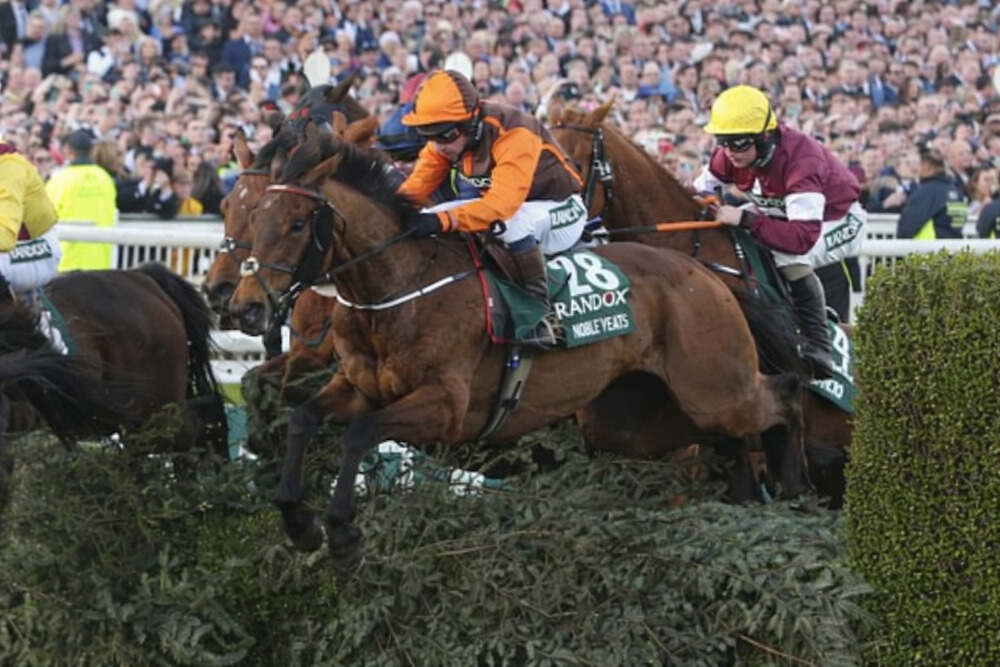
What those Grand National trends tell me before I assess the 2026 runners
By this stage, the profile feels much clearer. I am looking for a horse with:
- a proper staying background
- enough chase experience
- a workable level of class
- and ideally at least some solid substance behind his career record
In other words, I am not looking for a mystery horse. I am looking for a proven one. Maybe not the flashiest. Maybe not the most fashionable. But a horse with the right base, the right miles in the legs and the right kind of profile for a race that tends to reward substance over hype.
Quick snapshot
| Factor | Recent winning pattern |
|---|---|
| Runs over 3m+ | 10 of last 11 had at least 5 |
| Deeper stamina profile | 8 of last 11 had at least 7 runs over 3m+ |
| Wins over 3m+ | 8 of last 11 had at least 2 |
| Chase runs | 11 of last 11 had at least 7 |
| Chase wins | 9 of last 11 had at least 2 |
| Rating | 9 of last 11 were rated 146-160 |
| Graded wins | 8 of last 11 had at least 1 Grade 1-3 win |
| Previous Aintree run | 6 of last 11 |
| Previous Aintree win | 2 of last 11 |
Which Grand National 2026 runners fit the profile best
By this point, I feel I have a much clearer idea of the kind of horse I want. Not the most fashionable one. Not the one with the biggest reputation. Just the one who looks most like a modern Grand National winner.
So I started with the profile I had already built. I wanted the right age bracket, a workable weight, a live recent profile and a horse the market respected without making him an impossible story to tell.
And when I looked through the Grand National 2026 runners, a few names stood out more than the rest.
The Grand National 2026 runners who make the most sense on paper
| Horse | Why he fits |
|---|---|
| Jagwar | Right age at seven, carries 10st 10lb, arrives with strong Cheltenham form and still looks open to progress |
| Iroko | Eight years old, 11st 1lb, already showed he can handle Aintree and looks much closer to the usual age and weight mould |
| Johnnywho | Nine years old, comes here after winning the Ultima, and has the recent-form angle I want to see |
| Spillane’s Tower | Eight years old and carries 11st 8lb, which puts him right on the upper edge of the most common winning range |
| Oscar’s Brother | Eight years old, 10st 13lb and not overexposed in the market, which gives him a more interesting profile than some bigger names |
Jagwar looks like the cleanest Grand National 2026 fit
If I had to start with one horse, I would start with Jagwar. At seven, carrying 10st 10lb, he comes into the race with a profile that already looks very close to what I have been describing. He also brings the Cheltenham angle, which keeps appearing among recent Grand National winners, and he sits in the part of the market where plenty of winners have come from. This is not a hidden horse, but nor is he some suffocatingly obvious favourite. That feels about right.
Iroko still appeals as a strong Grand National 2026 fit
I also find Iroko very easy to keep on side from a profile point of view. He is eight, carries 11st 1lb, and already showed last year that Aintree suits him after finishing fourth in the race. For a piece built on trends, that matters. He is in the right age band, he is in the right general weight zone, and he does not need me to imagine that the track might suit him. I already know it does.
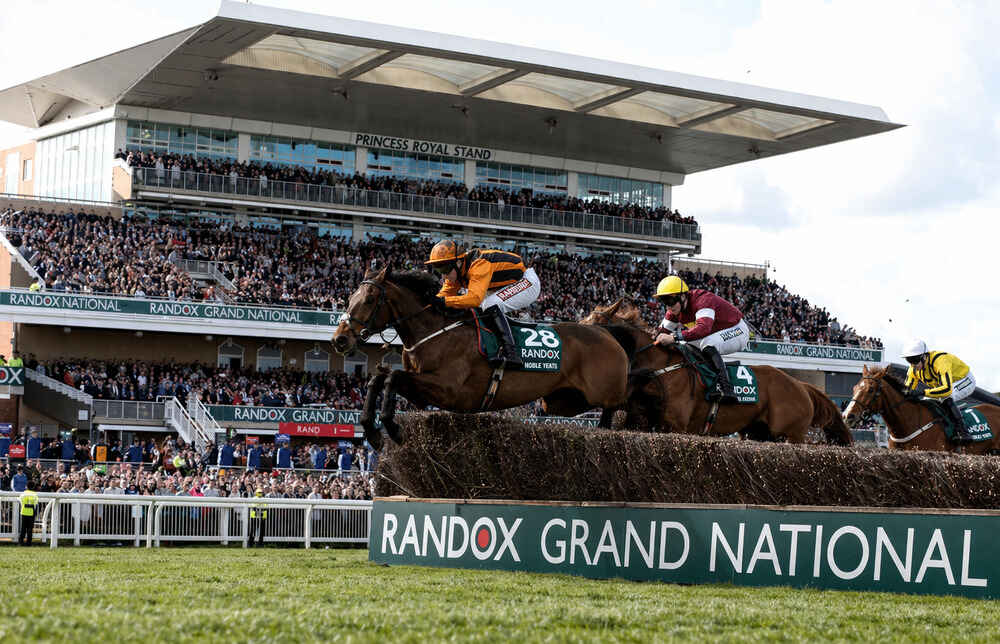
Johnnywho brings one obvious Grand National trend in his favour
Johnnywho is another who makes plenty of sense, mainly because he arrives off a major recent win after landing the Ultima at Cheltenham. I keep coming back to that point, because recent winners of this race usually arrive with a proper run behind them, not a vague excuse. The small negative is the weight, as 10st 4lb leaves him just below the most common recent winning range. That does not rule him out, but it does make him slightly less tidy as a trends fit than Jagwar or Iroko.
Spillane’s Tower and Oscar’s Brother still fit plenty of Grand National trends
I would also keep Spillane’s Tower and Oscar’s Brother firmly in the conversation. Spillane’s Tower is eight and carries 11st 8lb, which puts him right at the top edge of the weight range that keeps showing up in recent winners. Oscar’s Brother is also eight, with 10st 13lb, and looks more interesting the longer I stare at the profile. Neither is as obvious as the market leaders, but not every Grand National winner needs to wave a giant flag in advance.
The bigger names still come with more Grand National questions
That is where I become a little cooler on some of the headline names. I Am Maximus, Grangeclare West and Nick Rockett all have class, and all have serious back-form, but they are also ten or older and sit towards the top of the weights. Willie Mullins, of course, has become impossible to ignore in races like this, and his wider influence on the jumps scene is reflected in the current National Hunt Trainers Championship.
That does not make them impossible winners. It just means history is asking me to forgive more than one thing at once. And in a race like this, I usually prefer a horse who makes fewer excuses necessary.
Where I land on the Grand National 2026 runners
At this stage, Jagwar looks like the cleanest match to the profile I have built. Iroko is not far behind, especially with proven Aintree form already in the book. Johnnywho has the recent win I want, while Spillane’s Tower and Oscar’s Brother appeal as less obvious fits who still tick plenty of the right boxes. If you enjoy tracking emerging staying chasers and other names to keep on side through the season, you can also browse my horses to follow section.
That does not mean the answer is definitely sitting in that group. This is still the Grand National, after all. It has a long history of making certainty look a bit silly. But if I am trying to build the most likely type of winner from the last 11 renewals, that is the shortlist I keep coming back to.
In the end, I do not think the Grand National 2026 can ever be reduced to a neat little formula. If it could, none of us would bother watching it and half the fun would disappear. But I do think the last 11 winners leave behind a profile that is far too consistent to ignore. The right age, the right sort of weight, proper chase experience, proven stamina and a live recent profile all keep showing up for a reason
So no, this piece is not about pretending I have solved the race. It is about narrowing the picture and asking a better question. Not which horse is easiest to fancy, but which horse looks most like the kind of runner that usually gets the job done. And for me, that is where the real Grand National 2026 puzzle begins. If you enjoy this kind of big-race analysis, you can also find more of my race previews covering the major contests of the season.

Leave a Reply